
A culinary career grows through repeated practice, reliable habits and a willingness to learn from a busy kitchen. Cooking an impressive dish is only one part of the work: preparation, hygiene, teamwork and consistency matter just as much. This guide outlines a practical route for someone considering professional cooking.
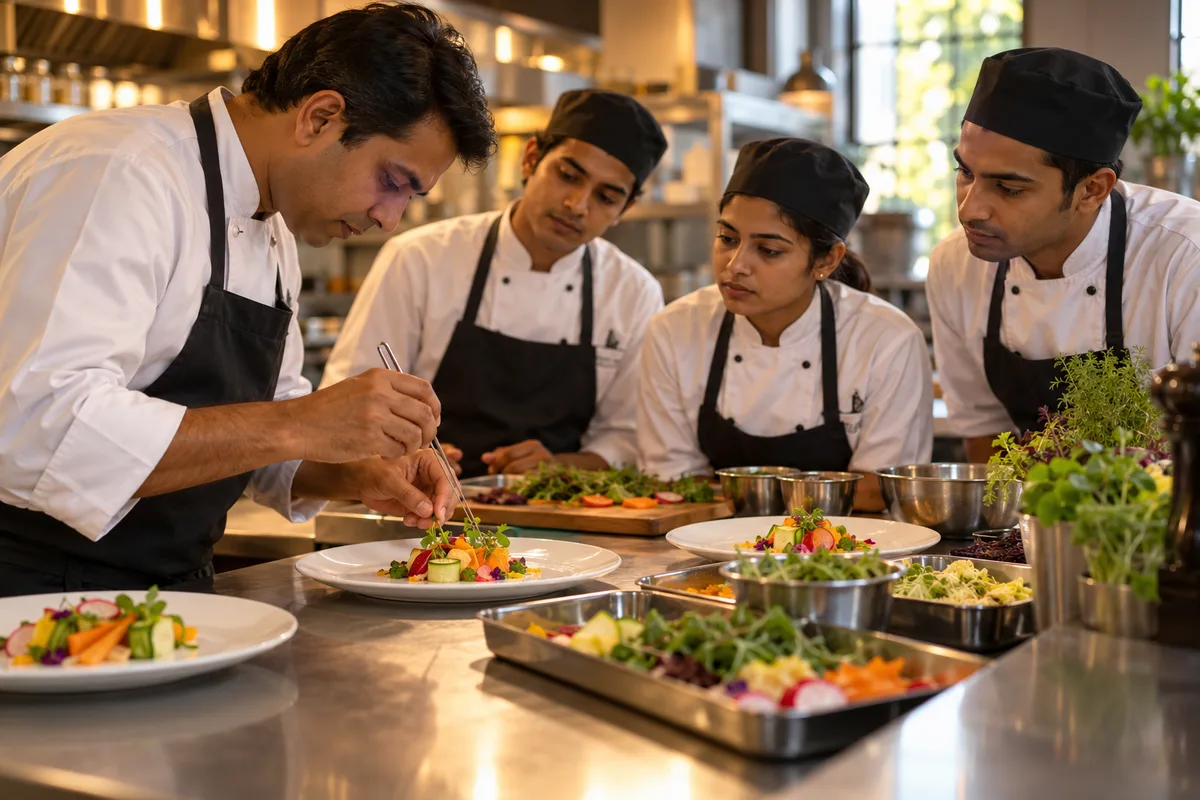
1. Understand the work before choosing a course
Explore the differences between restaurant service, hotel kitchens, bakery production, catering and food entrepreneurship. A pastry kitchen may value precise weighing and long preparation cycles; a restaurant section requires fast organisation during service. Speak to working cooks about shifts, physical demands and entry-level responsibilities. A short workshop or supervised kitchen visit can help you decide whether the daily routine suits you.
2. Compare training carefully
Ask each institute about practical teaching hours, class size, equipment access, assessment and the instructors’ professional experience. Request a clear breakdown of fees and materials. If a qualification or affiliation matters to your plans, verify it directly with the awarding organisation. Placement assistance is useful, but it is not the same as a guaranteed job.
3. Build a dependable foundation
- Practise safe knife handling, accurate weighing and a clean, organised workstation.
- Learn stocks, sauces, eggs, vegetables, grains and basic doughs before chasing complicated presentation.
- Keep a notebook recording ingredient weights, cooking observations and what you would change.
- Repeat a simple dish until you can produce it consistently, then add a new technique.
4. Turn practice into evidence
Create a small portfolio with clear photographs, ingredient lists and brief notes explaining your contribution. Include examples of preparation and organisation as well as finished plates. Be honest about what you made independently and what you completed under supervision. For an interview or trial, arrive on time, listen carefully and ask when an instruction is unclear.
Chef Tip: A useful training goal is consistency: make the same sauce three times and compare its seasoning, texture and yield.
5. Keep learning after your first role
Seek feedback, rotate through different sections where possible and strengthen communication alongside technical skills. Track costs and waste as your responsibilities grow. Career paths differ, so choose the next role for the skills it will teach rather than the job title alone.
Explore practical learning at Cook & Bake Academy, and read our kitchen tools guide to build your home practice kit.







0 Comments